HMS Olympus
HMS Olympus
During the Second World War, Malta held immense strategic value for the Allied forces. Positioned in the central Mediterranean, the island served as a crucial base for disrupting Axis supply lines. In response, Axis powers imposed a blockade, laying extensive minefields on the approaches to Malta’s harbours and launching relentless bombing raids in an attempt to neutralise the threat the island posed to Axis shipping.
By April 1942, the situation had grown desperate and resupplying Malta with essential provisions for both the local population and Allied forces became increasingly difficult and dangerous. Despite constant danger, Allied convoys pressed on, and submarines played a crucial role in maintaining these lifelines, operating under what became known as the “Magic Carpet Service.” One of the vessels involved in this effort was HMS Olympus, a British Odin-class submarine. First laid down in 1927 and commissioned in 1930, Olympus was part of a post–World War I initiative to support long-range patrol missions. The submarine measured 86.5m in length and displaced 1,700 tons when surfaced and 2,030 tons submerged. Fuel was stored in riveted external tanks holding up to 190 tons, though these tanks were known to be prone to leaks. During patrols, the vessel typically consumed about 2.1 tons of fuel per day. Originally deployed to the South China Sea with the 4th Submarine Flotilla, Olympus was reassigned to the Mediterranean in 1940, arriving in Malta on 7 May 1940. While docked, she was damaged in an air raid by an Italian bomber and subsequently repainted dark blue to blend better with the Mediterranean waters. Despite repeated damage and limited transport capacity compared to merchant vessels, Olympus was adapted to carry cargo in and out of Malta, offering a safer option amid persistent Axis air raids and minelaying outside Malta’s Grand Harbour. However, by April 1942 Axis bombing intensified and the Royal Navy ordered the relocation of the 10th Submarine Flotilla to Alexandria, Egypt. On 20 April, HMS Olympus departed Gibraltar for Malta, carrying 87 tons of kerosene and aviation fuel, along with 40 tons of ammunition. For her return voyage, Olympus was tasked with transporting the crews from two other damaged submarines back to the United Kingdom.
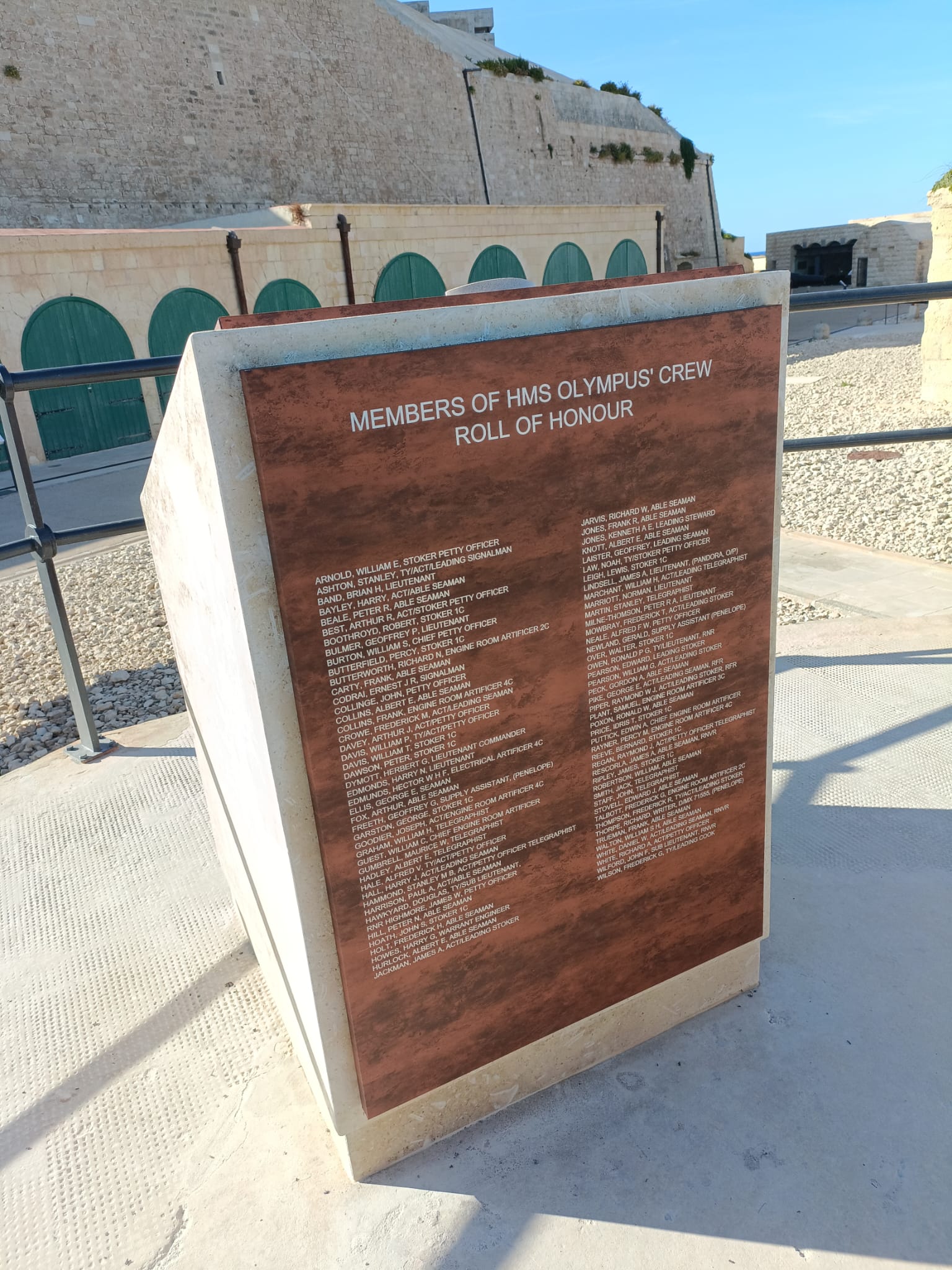
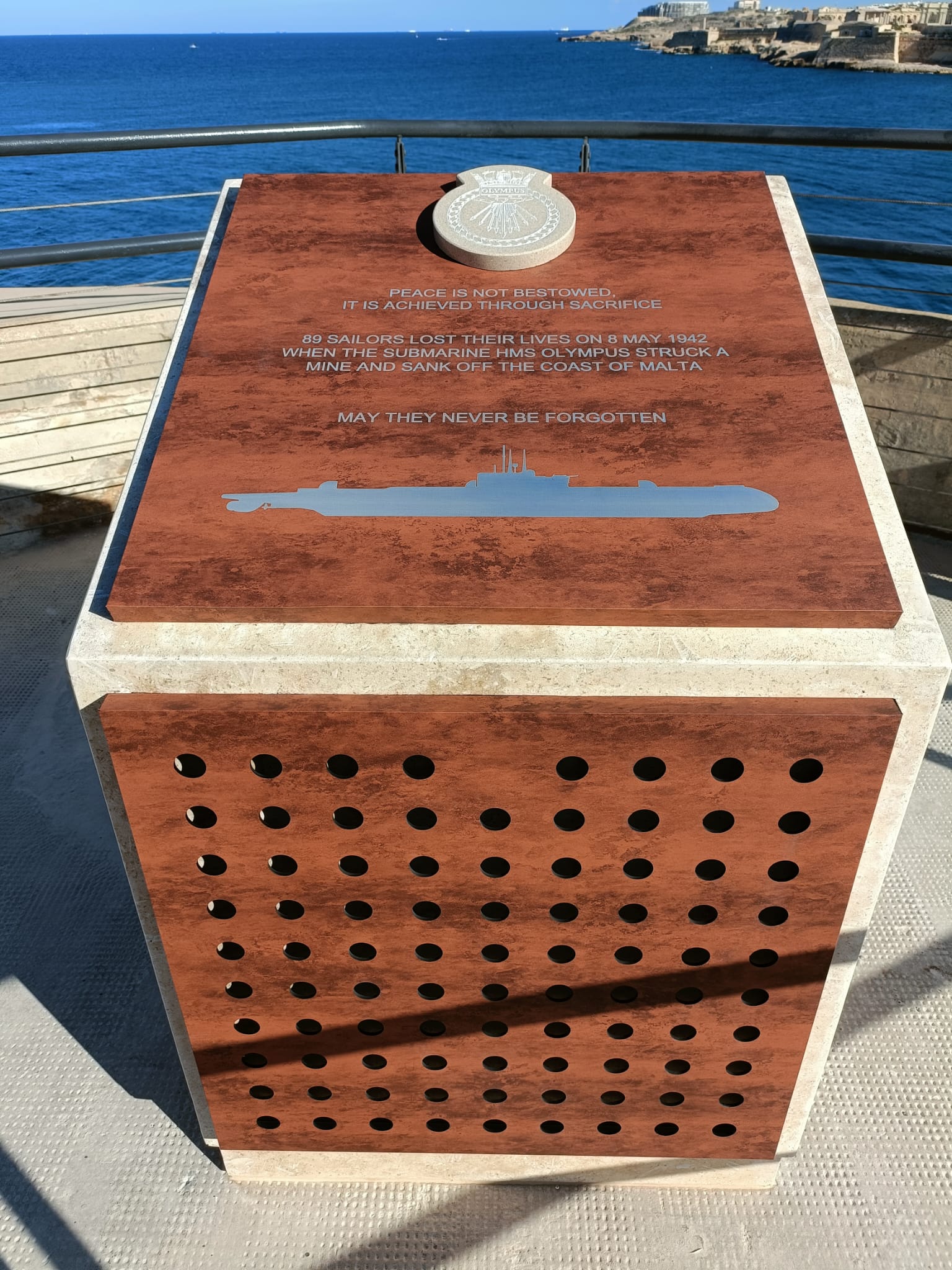
Tragically, in the early hours of 8 May 1942, shortly after departing Malta’s Grand Harbour with 98 servicemen aboard (55 of her own crew and 43 others) HMS Olympus struck a mine. The explosion caused catastrophic flooding and disabled all communications, including the radio and signal flares. The crew’s efforts to alert Malta were unsuccessful, and the submarine sank within approximately 15 minutes. Only 9 crewmembers survived the five-hour swim back to shore, recovered servicemen were buried at the Kalkara Naval Cemetery and the rest remain entombed at sea. The loss of HMS Olympus remains the single biggest submarine tragedy of the Second World War and in Royal Navy submarine history.
The wreck site of HMS Olympus was discovered in 2011 through a remote sensing survey carried out by the University of Malta and the Superintendence of Cultural Heritage. It was first dived in 2017 and declared protected and opened to the diving public in 2019. Today, access to the submarine is regulated by Heritage Malta’s Underwater Cultural Heritage Unit.
The Wreck.
The wreck site of HMS Olympus lies approximately 4 km off the Grand Harbour, sitting upright on the seabed at a depth of 115m. The submarine has signs of damage on her starboard side, providing evidence for where the mine struck that sunk the vessel. The deck gun remains intact and pointing upwards, a poignant symbol of the crew’s desperate but unsuccessful attempts to signal distress. The hatch in the conning tower is also open, indicating the location where the crew escaped as the submarine started gaining water. At the base of the conning tower is a memorial plaque placed by the University of Malta dive team in 2017 to honour the fallen servicemen. The plaque was cleared of marine growth by Heritage Malta in 2024.
 Marine Life War Grave Unexploded Ammunition